


Without a modern PRM operating model that focuses on ongoing operational execution and reliable data, vendor organizations risk losing channel revenue to competitors with better partner enablement.
Around 70% of global IT spending is projected to be directly driven or influenced by partners in 2026, according to a recent TechSellers Community white paper. However, many vendors still face operational challenges, including limited visibility into partner performance and fragmented data across PRM platforms, CRM tools, and partner portals.
A modern PRM operating model which embeds a global marketing concierge team can help tech organizations address these execution gaps. By combining localized resources, specialized technical expertise, and hands-on guidance, Macro’s concierge works alongside partner and channel marketing teams to ensure partners are fully enabled, engaged, and contributing to pipeline and revenue.
Common Execution Challenges in PRM Programs
Traditional partner relationship management processes are no longer fit to support complex multi-tier, multi-region partner programs. And if we look at the roadblocks tech organizations face, it’s easy to understand why shifting to a modern PRM operating model is essential.
One of the most common issues is having limited insight into real partner activity. When engagement data is spread across disconnected PRM systems, CRM records, and static spreadsheets, teams cannot easily see which partners drive the pipeline, which are inactive, and which require targeted support. This makes it difficult to allocate time and resources where they will have the most impact.
Another major challenge is inconsistent program execution across partners. Without standardized workflows for onboarding, enablement, deal registration, and follow-up, each partner ends up operating differently across markets. As a result, shared revenue objectives become difficult to track and enforce.
Traditional approaches also rely heavily on manual processes. Channel managers spend more time chasing activity updates, sending check-in emails, and compiling reports instead of actually supporting partners. As a partner ecosystem grows, this model becomes increasingly difficult to scale without higher operational costs or headcount.
Is Your Partner Program Outgrowing an Outdated PRM Operating Model? [Is Your Program Outgrowing an Outdated PRM Model?]
Even the most advanced PRM tools and strategies fail if the operating model behind them can’t keep up with your partner ecosystem. Here are five critical signs to look for:
- Low Partner Adoption
Partners rarely log in, prefer to skip onboarding, or ignore workflows. Adoption drops when platforms are hard to navigate, require extra effort, or don’t provide clear value to partners. Low adoption indicates partners aren’t fully participating, which reduces overall program results. - Overworked Internal Teams
Channel managers spend most of their time sending reminders, reconciling spreadsheets, or chasing updates instead of actively supporting partners. When internal teams are already stretched, scaling partner programs adds strain and limits their ability to help partners perform. - Inconsistent Partner Execution
Different onboarding, deal registration, or co-selling practices across regions or partner tiers create fragmented execution. This inconsistency leads to missed opportunities, uneven end customer experiences, and lower revenue. - Underused Tech Stack Capabilities
High-value capabilities such as Artificial Intelligence (AI) features, analytics dashboards, automated campaigns, or incentive tracking are underused or even unused, turning expensive functionality into shelfware. This indicates poor alignment between platform capabilities and partner needs. - Limited Visibility into Revenue Impact
If you can’t easily see which partners are generating pipeline, winning deals, or contributing to revenue, your data is fragmented or underused. This lack of visibility makes forecasting unreliable, scaling your partner program difficult, and understanding which partners drive results nearly impossible.
What Makes a Concierge-Driven PRM Model Powerful and Cost-Effective [What Makes a PRM Model More Efficient]
Think of a concierge as a natural extension of your team. A modern PRM operating model extends beyond tools to include concierge-led support, ensuring partners focus on selling while channel teams gain clear visibility into partner performance and pipeline contributions. Here are the key benefits of this approach:
- Faster Partner Ramp-Up and Higher Program Productivity
Concierge support simplifies onboarding, training, and activation, enabling partners to start contributing quickly. Automated lead and deal workflows, combined with continuous support in campaign setup and incentive management, reduce errors and manual effort. - Efficient Use of AI Capabilities
Concierge teams are familiar with the platforms’ latest AI functionalities and can help you implement them effectively. Partner satisfaction increases when you combine AI efficiency with human high touch. - Reliable Execution Across Teams and Regions
Concierge-led PRM programs have standardized processes for onboarding, deal registration, co-selling, and data reporting, while supporting regional adaptations. Local expertise and multilingual support allow partners in different markets to execute campaigns effectively. - Measurable Impact Across Partners
Concierge-led PRM ensures metrics capture partner recruitment, onboarding, enablement, pipeline contribution, and overall program health. Internal partner marketing and operations managers get access to structured reporting, dashboards, and insights that help demonstrate ROI of concierge partner enablement. - Prioritization of Most Proactive Partners
Visibility into partner performance allows channel marketing teams to allocate resources towards the most engaged and proactive partners. Concierge teams coordinate segmented partner communication, localize campaign assets, and report those results back to the vendor.
The 4 Key Pillars of a Modern PRM Operating Model
In 2026, a modern PRM framework starts with powerful technology but doesn’t stop at it. High-performing partner ecosystems are built on four foundational pillars that combine repeatable processes, integrated systems, enablement efficiency, and excellent global execution as follows:
- Operational Maturity
Operational maturity ensures each partner in your ecosystem follows a well-structured, clear process from onboarding to campaign execution and lead registration. Unlike ad-hoc initiatives that bring inconsistent, short-term results, a modern PRM operating model is a long-term approach that relies on workflow standardization, automated processes, and KPIs tied to pipeline and revenue generation. - PRM and CRM Data Synchronization
Unified data across PRM and CRM platforms ensures that partner activity, deals, and performance are easily accessible in one place. When systems communicate in real time and marketing, sales, and partner operations teams stay aligned, channel managers can make informed decisions that support pipeline growth and program success. - Scalable Partner Enablement
Enablement programs that grow alongside your partner ecosystem make it easier for your organization to expand into new regions, support more partners, and launch additional campaigns without overloading internal teams. Partners become more self-sufficient and productive through effective training, ready-to-use assets, and timely support, while internal teams are freed to focus on strategic initiatives. - Consistent Execution via Concierge-Led Operations
Concierge-led operations embed hands-on support across your partner ecosystem, enabling consistent execution across regions, partner tiers, and campaigns. Vendors gain access to external localization capabilities and multilingual support that helps their teams maintain branding, messaging, and global campaign quality with minimal effort.
Building World-Class PRM Programs with the Macro Global Concierge Team [World-Class PRM with Macro Concierge Team]
Successful PRM programs aren't driven by platforms alone but through strong operations, embedded expertise, and long-term partnership. Macro’s global partner relationship management concierge works as an extension of your internal teams, helping partner relationships thrive.
Key capabilities include:
- Regional Expertise and Language Support: Deliver localized campaigns and content in over 10 languages to engage international partners.
- Partner Onboarding and Enablement: Guide partners through setup and training so they can start running campaigns and registering deals.
- PRM Platform Administration: Set up, optimize, and connect the PRM platform to your CRM so partner activity, deals, and performance data are easily accessible in one place.
- Goal Alignment and Performance Monitoring: Support teams in setting regional partner goals and tracking partner activity, pipeline, and results across markets.
Case Study: Global PRM Concierge in Action
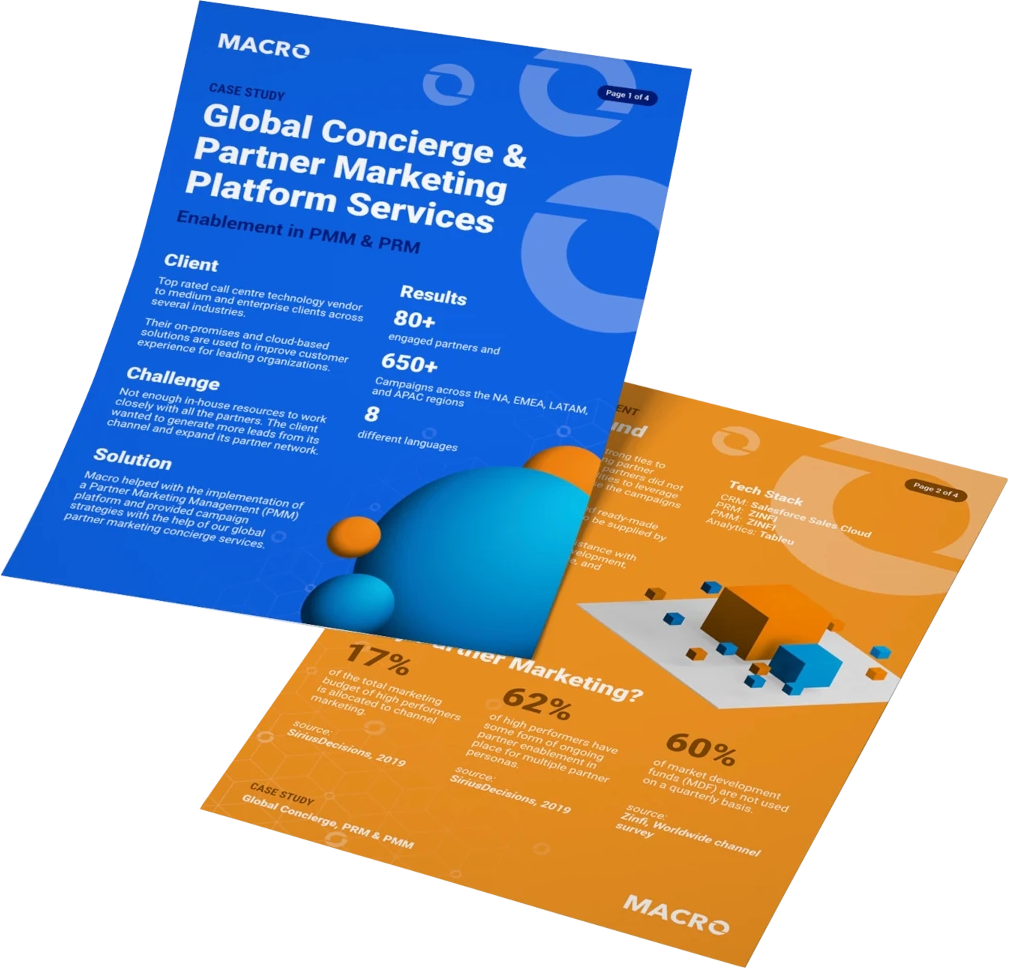
A global call-center technology provider relied heavily on partner-driven revenue for growth but struggled with inconsistent engagement. The majority of their partners lacked time, resources, or marketing expertise to capitalize on the partnership, while internal teams couldn’t provide hands-on support at scale.
Macro’s concierge team created ready-to-use content and campaigns localized for the company’s global partners. They also integrated the platform with Salesforce, improving visibility into partner activity and lead tracking.
Overall, the concierge team coordinated 650+ campaigns for over 80 partners across NA, EMEA, LATAM, and APAC in 8 languages, closing the gap between strategy and execution and demonstrating the power of a modern PRM operating model.
Read the details of the Case Study.
.webp)
.webp)
